• All Access Login
  • Contact
TheMacU.com
  • Home
  • Free Lessons
  • Full Tutorials
    • Core Tutorials
      • macOS 26 Tahoe What’s New
      • macOS Core Concepts
      • iOS 26 What’s New
      • iOS Core Concepts
      • iPadOS Overview
      • iCloud for Mac, iPad & iPhone
      • Apple Intelligence
      • Apple Watch Core Concepts
      • Mac Backup
      • Mac Utilities
      • Mac Security
      • CleanMyMac X
      • Markup for iOS
      • iOS 18 What’s New
      • macOS Sequoia What’s New
    • Productivity Tutorials
      • Safari for Mac
      • Safari for iOS (iPad & iPhone)
      • Mail for Mac
      • Mail for iOS (iPad & iPhone)
      • Files for iOS
      • Contacts for Mac & iOS
      • Calendar for Mac & iOS
      • Reminders for Mac & iOS
      • Apple Maps for iOS & Mac
      • Notes for Mac & iOS
      • FindMy for iOS & Mac
      • Freeform for iOS & Mac
      • Health App Overview
      • Pages for Mac
      • Numbers for Mac
      • Keynote for Mac
      • Pages for iOS
    • Photography Tutorials
      • Photos for Mac
      • Photos for iPad
      • Photos for iPhone
      • iPhone Camera
      • iMovie for Mac
      • iMovie for iOS (iPad & iPhone)
      • Pixelmator Pro Essentials
      • Pixelmator for iOS (iPad & iPhone)
      • Preview for Mac
      • Photos for Mac – View & Organize
      • Photos for Mac – Edit & Share
    • Media & Entertainment Tutorials
      • Music App for Mac
      • Music App for iOS (iPhone & iPad)
      • Apple Music Service
      • AirPods Tutorial
      • iTunes for Mac
      • Apple Podcasts
      • Apple News
      • Apple Books
  • Testimonials
  • Memberships & Pricing
  • Click to open the search input field Click to open the search input field Search
  • Menu Menu
Free iOS Lessons

What Are Photo Bursts on iPhone and Why You Should Use Them

What Are Photo Bursts on iPhone? A Quick Answer Before We Dive In


What are photo bursts on iPhone is one of those questions that comes up the moment you accidentally hold the shutter button too long – and suddenly have 47 nearly identical photos to deal with.

Here’s the short answer:

Photo Burst Mode on iPhone is a camera feature that captures 10 full-resolution photos per second as long as you hold the shutter button down. It’s designed to help you catch the perfect moment when things are moving fast.

Key facts at a glance:

  • What it does: Takes a rapid sequence of photos in one continuous burst
  • How fast: 10 frames per second
  • How to start: Swipe the shutter button left (newer iPhones) or hold it down (older models)
  • How to stop: Lift your finger
  • Where photos go: Grouped together in your Photos app under the Bursts album
  • Best used for: Action shots, group photos, kids, pets, sports – any moment that’s hard to time perfectly

It’s not the same as Live Photos (more on that later), and it’s much more useful than most people realize.

I’m Drew Swanson, founder of TheMacU.com and an Apple educator who has spent years helping users of all skill levels unlock features just like this – including what are photo bursts on iPhone and how to use them without filling up your storage. Let’s walk through everything you need to know.
 

video
play-sharp-fill

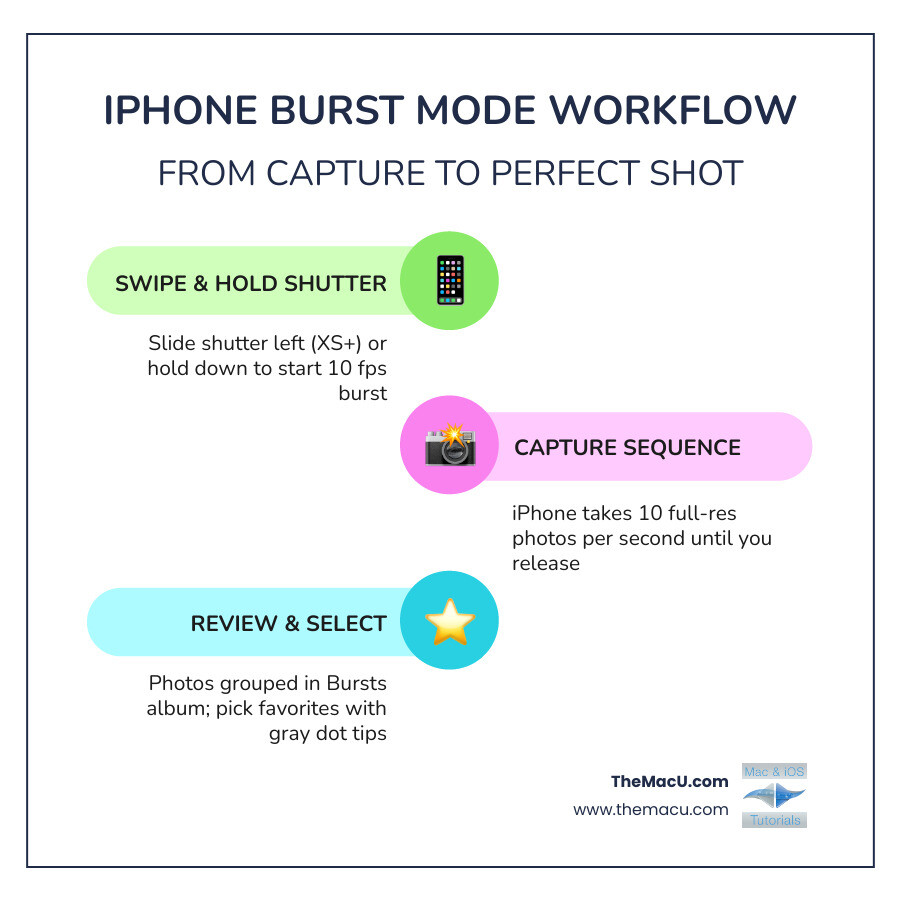
Infographic showing iPhone Burst Mode workflow from pressing shutter to selecting best photo - what are photo bursts on

What Are Photo Bursts on iPhone and How Do They Work?

At its core, Burst Mode is a high-speed sequence tool built directly into your iPhone’s Camera app. While a standard tap of the shutter button captures a single frame, Burst Mode engages a “continuous shooting” state. This isn’t just a low-quality video snippet; your iPhone is actually firing off 10 full-resolution images every single second.
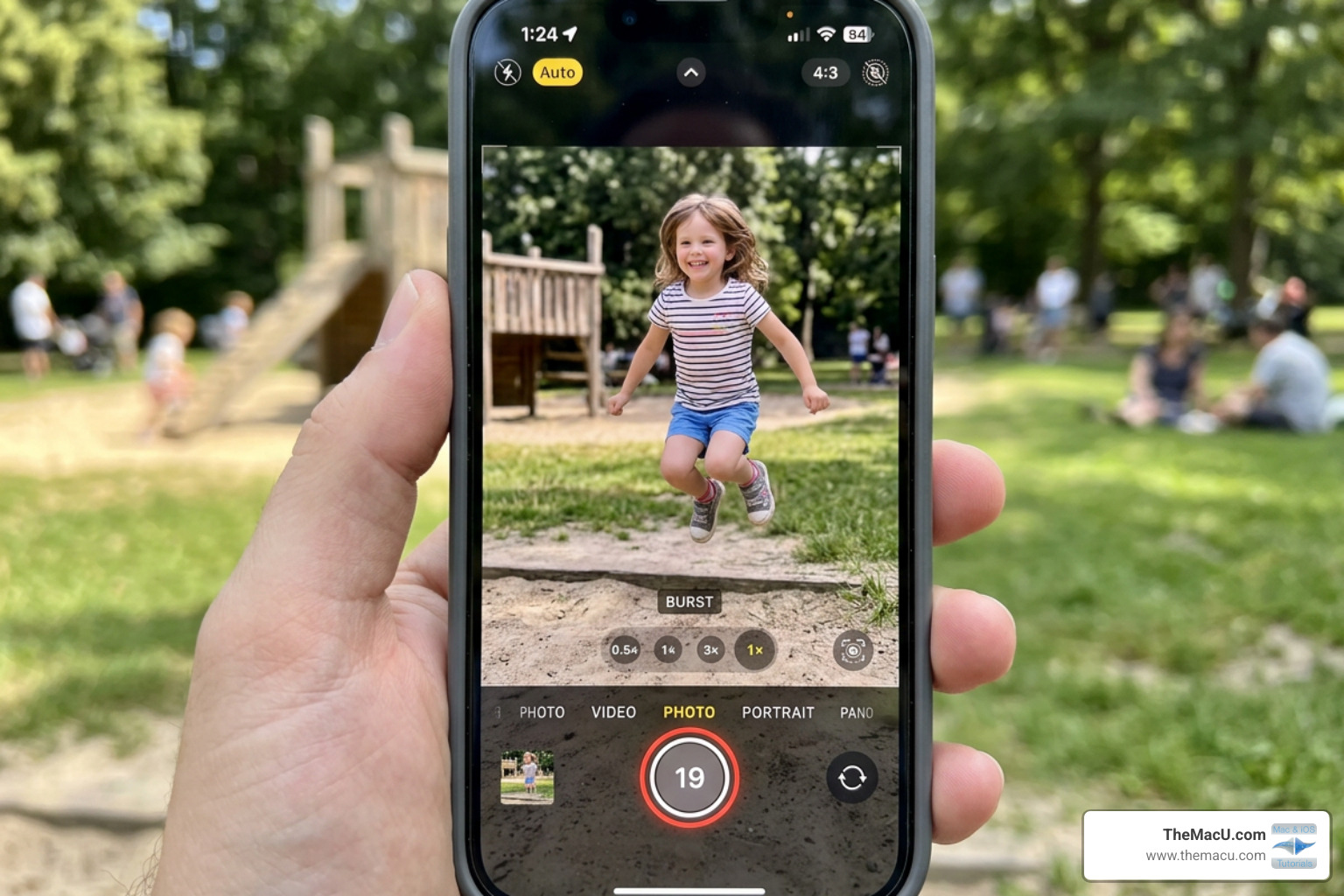
iPhone camera UI showing the burst counter increasing as photos are taken - what are photo bursts on iphone

When you activate a burst, you’ll see a counter appear at the bottom of the screen (or inside the shutter button, depending on your model) that ticks up rapidly. This tells you exactly how many frames you’ve captured in that specific set.

The magic happens behind the scenes. Your iPhone’s hardware processing and buffer management work overtime to ensure each of those 10 frames is processed with high fidelity. This is why Capture action shots with Burst mode on your iPhone camera is such a game-changer for moving subjects—it allows the device to stay ahead of the action, ensuring you don’t miss the peak moment because of “shutter lag.”

Activating What Are Photo Bursts on iPhone Across Different Models

Apple updated the way we trigger Burst Mode a few years ago, which led to some confusion. If you’ve upgraded your phone recently, you might have noticed that holding the shutter button now starts a video (QuickTake) instead of a burst. Here is how to navigate the interface changes:

  • iPhone XS, iPhone XR, and newer models (including iPhone 11 through iPhone 16): To take a burst, you must tap the shutter button and immediately slide it to the left (in portrait orientation) or down (in landscape). Hold it there to keep shooting, and lift your finger to stop.
  • iPhone X and Older Models: On these legacy devices, the process is simpler: just press and hold the shutter button. The haptic feedback will give you a subtle “pulse” as the photos rack up.

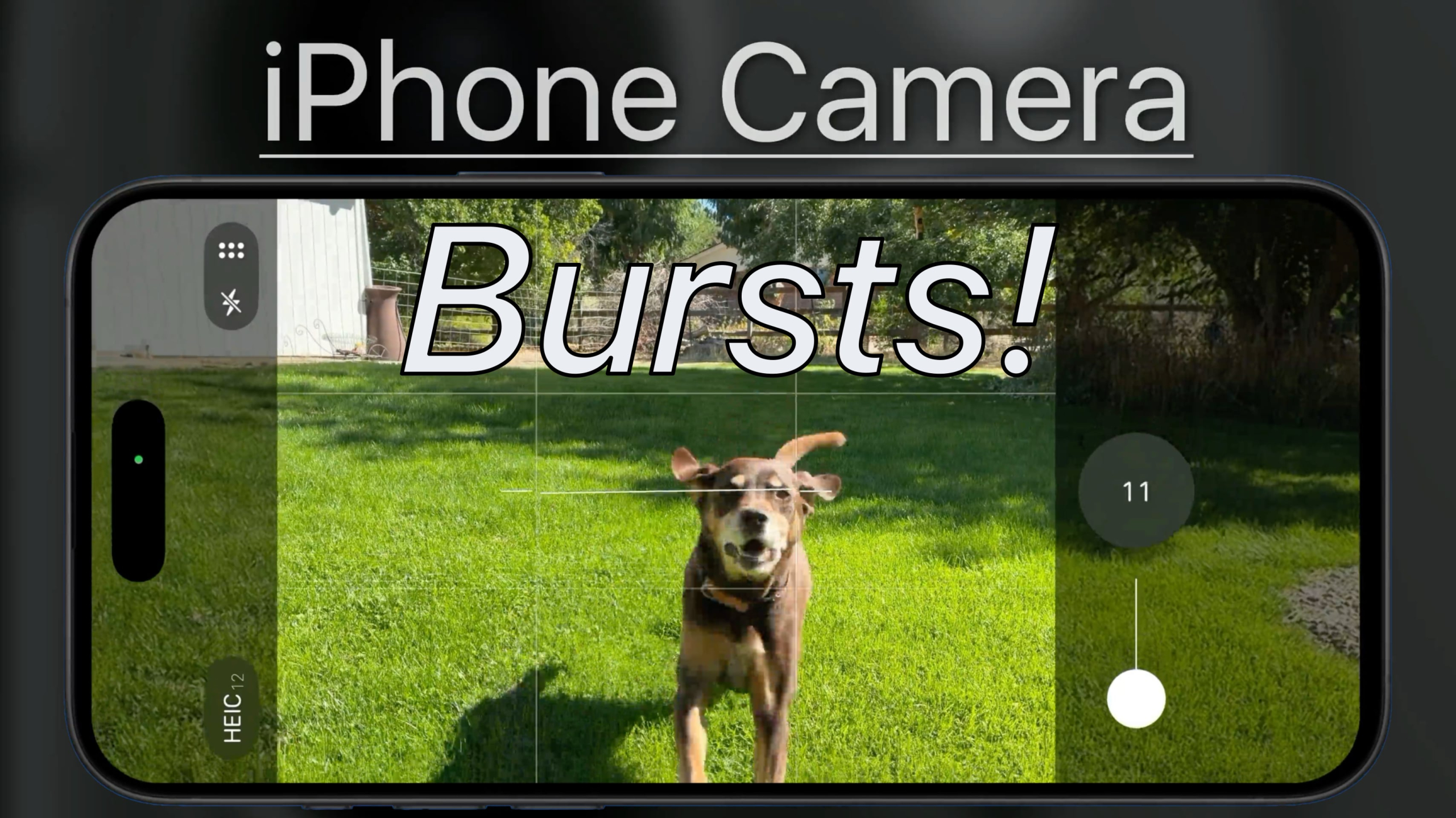
If you find the “slide-to-the-left” gesture a bit finicky, don’t worry—we have a tactile alternative that many pro photographers prefer. You can see a full breakdown of these gestures in our Bursts iPhone Camera Tutorial.

Using the Volume Up Button for Bursts

For those who want a more traditional “camera feel,” you can use the physical buttons on the side of your iPhone. By default, the Volume Up button might just take a single photo or start a video. To change this:

  1. Open Settings.
  2. Scroll down to Camera.
  3. Toggle on Use Volume Up for Burst.

Now, when you are in the Camera app, you can simply squeeze and hold the Volume Up button to fire off a high-speed sequence. This is incredibly helpful for cold weather shooting when you’re wearing gloves, or when the phone is mounted on a tripod and you want to minimize screen shake.

Learn much more in our full iPhone Camera Video Tutorial!

Burst Mode vs. Live Photos: Which Should You Choose?

Many users ask us, “Why use Burst Mode when I already have Live Photos turned on?” While they seem similar, they serve very different purposes. A Live Photo is essentially a 3-second mini-movie (1.5 seconds before and after you hit the shutter). While you can change the “Key Photo” in a Live Photo, there is a major catch: the alternate frames are often lower quality and suffer from cropping issues.

Feature Burst Mode Live Photos
Frame Rate 10 frames per second 15–30 fps (video-based)
Image Quality Full resolution on every frame High quality only on “Key Photo”
Best Use Action, sports, blinking prevention Memories, subtle movement, “Long Exposure” effect
Storage Impact High (if you keep all frames) Moderate
Manual Selection You pick the best still AI picks the best frame by default

If you are shooting a high-stakes moment—like a child jumping into a pool or a sports play—what are photo bursts on iphone is the superior choice because every single frame is a high-resolution still image.

Best Practices for Capturing Perfect Moments

To get the most out of Burst Mode, we recommend going beyond just holding the button. You need to think like a photographer.

  • Predict the Movement: Don’t wait for the action to start. If you see a runner approaching or a bird about to take flight, start the burst a second early. It’s easier to delete extra frames than to wish you had started sooner.
  • Composition and Negative Space: Use the Composition Grid (Settings > Camera > Grid). If your subject is moving from right to left, leave “negative space” on the left side of the frame so they have room to “move into” the shot.
  • Keep it in Focus: Tap on your subject’s face on the screen before starting the burst. This locks the focus so the iPhone doesn’t try to refocus mid-sequence.

When to Use What Are Photo Bursts on iPhone

We’ve found that Burst Mode is the “secret sauce” for several tricky scenarios:

  1. Group Photos: This is the ultimate “blink-prevention” tool. Take a 20-frame burst, and you are almost guaranteed to find one where everyone has their eyes open and is actually looking at the lens.
  2. Candid Interactions: Capture the subtle hug between a mother and daughter or the split-second “matching expressions” between a pet and its owner.
  3. Splashing Water and Nature: Whether it’s a waterfall or a bird in flight, the 10 fps speed allows you to “freeze” the water droplets or wing positions perfectly.
  4. Windy Conditions: If you’re taking a portrait and the wind is blowing hair or clothes around, a burst helps you find the one frame where everything looks intentional rather than messy.

Note: In low-light conditions, Burst Mode can sometimes result in blurry photos. This is because the camera’s aperture has to stay open longer to let in light, but the high-speed nature of bursts forces a faster shutter speed. For the best results, stick to well-lit environments.

Advanced Tips: Timers and Remote Triggers

Did you know you can use Burst Mode even when you aren’t holding the phone?

  • The Countdown Timer: Set the timer (3s or 10s) in the Camera app. When the timer hits zero, the iPhone will automatically take a 10-photo burst. This is perfect for self-included group shots.
  • Apple Watch Remote: You can trigger a burst from your wrist. Pro tip: Disable Live Photos on your iPhone first, as the Apple Watch remote often defaults to a single shot if Live Photos are active.
  • Stability: If you don’t have a tripod, prop your iPhone on a window ledge or a stable surface. This ensures that the only movement in the photo is your subject, not the camera.

Managing Your Library: Selecting and Deleting Bursts

One of the biggest fears people have with what are photo bursts on iphone is that they will run out of storage. If you take a 50-photo burst and keep them all, that’s 50 high-res files eating up space. Fortunately, iOS makes it easy to clean up.

  1. Open the Photos app and go to the Albums tab.
  2. Scroll down to Media Types and tap Bursts.
  3. Tap the burst you want to review, then tap Select at the bottom.
  4. Swipe through the photos. Look for the gray dots—these are the frames the iPhone’s AI suggests are the sharpest or have the best expressions.
  5. Tap the circle in the bottom-right corner of the photos you want to keep.
  6. Tap Done.
  7. Crucial Step: Choose “Keep Only Favorites.” This will save the photos you selected as individual images in your library and move the other dozens of “rejects” to the Recently Deleted folder.

If you are managing your library from a computer, you can also View photo bursts in Photos on Mac. The process is similar: double-click the burst, click “Make a Selection,” and choose what to keep. Remember to empty your Recently Deleted folder if you need to reclaim that storage space immediately!

Frequently Asked Questions about iPhone Photo Bursts

Why are my burst photos blurry?

Blurriness usually comes down to lighting conditions. In dark rooms, the iPhone tries to use a slower shutter speed to gather light. Since Burst Mode requires a fast shutter speed to hit that 10 fps mark, the “exposure” might be off, or the sensor might not have enough light to freeze the motion. To fix this, move to a brighter area or use a tripod to eliminate “camera shake.”

Do burst photos take up more storage?

Initially, yes. A burst of 100 photos is essentially 100 separate image files. However, iOS is smart; it “stacks” them so they only look like one photo in your main library. To prevent “storage bloatware,” we recommend a manual cleanup after every photoshoot using the “Keep Only Favorites” method mentioned above.

Can I turn off Burst Mode entirely?

There isn’t a single “Off” switch for Burst Mode because it’s a core gesture of the camera. However, you can prevent accidental bursts by being mindful of the shutter button. If you find yourself accidentally triggering bursts with the side buttons, go to Settings > Camera and turn off “Use Volume Up for Burst.”

Conclusion

Mastering what are photo bursts on iphone is one of the fastest ways to elevate your photography from “standard snapshots” to professional-looking action shots. By understanding the 10 fps technology and learning how to manage your storage, you can stop worrying about timing the shutter perfectly and start focusing on the composition of your shots.

At TheMacU.com, we believe that technology should work for you, not frustrate you. If you found this guide helpful, we invite you to Learn more with our Photography Tutorials. Our professionally scripted video lessons offer hands-on guidance on everything from basic camera settings to advanced editing workflows for Mac and iOS. Whether you’re a beginner trying to organize your first Bursts album or a hobbyist looking to master the latest iPhone 15 Pro and iPhone 16 Pro features, we have the resources to help you succeed. Happy shooting!

March 19, 2026
https://themacu.com/wp-content/uploads/2026/03/what-are-photo-bursts-on-iphone-and-why-you-should-use-them-image.jpg 720 1080 Drew http://themacu.com/wp-content/uploads/2017/06/TMU.com-Header-logo-jpg-300x138.jpg Drew2026-03-19 02:18:182026-03-19 16:40:08What Are Photo Bursts on iPhone and Why You Should Use Them
Mac, iPhone and iPad Tips!

Mastering the Mac Search Bar: A Comprehensive Guide

The macOS Spotlight Search Guide: Find Anything on Your Mac in Seconds


This macos spotlight search guide covers everything you need to know to search faster and smarter on your Mac:

  • Open Spotlight: Press Command-Space (or F4 on newer Macs)
  • Switch search modes: Use Command-1 (Apps), Command-2 (Files), Command-3 (Actions), Command-4 (Clipboard)
  • Filter by file type: Type /PDF, /Images, or use kind:pdf
  • Search by name only: Use name: before your search term
  • Boolean searches: Use uppercase AND, OR, NOT for precise results
  • Preview files: Press Space to open Quick Look without leaving Spotlight
  • Reveal in Finder: Press Command-R on any file result
  • See past searches: Press the Up Arrow in the search field

Most Mac users only scratch the surface of what Spotlight can do. They type a word, click a result, and move on. But Spotlight in macOS — especially with the major updates in macOS Tahoe — is far more powerful than a simple search box. It can launch apps, run actions, convert currencies, manage your clipboard history, and find files buried deep in folders you forgot existed.

Whether you are hunting for a PDF from three years ago or trying to send a message without opening the Messages app, Spotlight can handle it — if you know how to use it.

I’m Drew, founder of TheMacU.com and a longtime Apple trainer who has helped thousands of Mac users go from frustrated to confident through step-by-step tutorials — including creating this macos spotlight search guide to help you unlock one of macOS’s most underused tools. Let’s explore everything Spotlight can do…

Read more

March 18, 2026
https://themacu.com/wp-content/uploads/2026/03/mastering-the-mac-search-bar-a-comprehensive-guide-image.jpg 1024 1536 Drew http://themacu.com/wp-content/uploads/2017/06/TMU.com-Header-logo-jpg-300x138.jpg Drew2026-03-18 02:26:232026-03-18 16:05:45Mastering the Mac Search Bar: A Comprehensive Guide
Mac, iPhone and iPad Tips!

Master Your Apple Notes Folders Without Breaking a Sweat

Why Apple Notes Folders Organize Your Digital Life Better Than You Think


Apple notes folders organize your ideas, tasks, and reminders into a system that’s easy to navigate — and setting it up takes just a few minutes.

Here’s a quick answer to get you started:

How to organize folders in Apple Notes:

  1. Create a folder — Tap or click “New Folder” in the Notes sidebar and give it a name.
  2. Create subfolders — Drag one folder onto another to nest it inside.
  3. Move notes — Drag a note into any folder, or use the Move option from the note’s menu.
  4. Pin important notes — Touch and hold a note, then tap “Pin Note” to keep it at the top.
  5. Use Smart Folders — Set up automatic filters using tags, dates, or checklists.
  6. Recover deleted notes — Check the “Recently Deleted” folder within 30 days.

Read more

March 17, 2026
https://themacu.com/wp-content/uploads/2026/03/master-your-apple-notes-folders-without-breaking-a-sweat-image.jpg 1024 1536 Drew http://themacu.com/wp-content/uploads/2017/06/TMU.com-Header-logo-jpg-300x138.jpg Drew2026-03-17 02:21:012026-03-17 19:38:58Master Your Apple Notes Folders Without Breaking a Sweat
News, Updates

New Calendar Tutorials Available for Mac & iOS!

Our tutorials on how to use the Apple Calendar App for both Mac & iOS have been re-recorded and updated! These Apple Calendar tutorials provide a comprehensive guide to using the app on both Mac and iOS (iPhone & iPad). They cover the basics of the interface, adding events and reminders, and managing different calendars. Lessons explain how to view and edit event details, send and respond to invitations, and work with shared or public calendars. Additional topics include using the Calendar widget, leveraging Siri for scheduling, setting up notifications, enabling time zone support on Mac, and printing calendars. Together, they offer everything you need to efficiently organize your schedule across all your Apple devices.  Learn More…

Current All Access Members can view the full tutorial Here…

Apple Calendar Tutorial for Mac, iPhone, iPad

Read more

March 14, 2026/1 Comment
https://themacu.com/wp-content/uploads/2022/11/Calendar2022.jpg 1024 1024 Drew http://themacu.com/wp-content/uploads/2017/06/TMU.com-Header-logo-jpg-300x138.jpg Drew2026-03-14 17:41:322026-03-14 17:41:32New Calendar Tutorials Available for Mac & iOS!
Free Mac Lessons

How to use Tags to label & organize files or Folders on a Mac!

video
play-sharp-fill

In this lesson that is part of the “macOS Core Concepts” Tutorial see how to use the Tags feature on your Mac. Tags in the macOS Finder provide a simple and effective way to organize and quickly locate both files and folders.

Read more

March 11, 2026
https://themacu.com/wp-content/uploads/2026/03/tagsmacSplsh-scaled.jpg 1438 2560 Drew http://themacu.com/wp-content/uploads/2017/06/TMU.com-Header-logo-jpg-300x138.jpg Drew2026-03-11 23:25:452026-03-11 23:27:06How to use Tags to label & organize files or Folders on a Mac!
Free iOS Lessons

How to add events & reminders in the iOS Calendar App. iPhone & iPad Tutorial!

video
play-sharp-fill

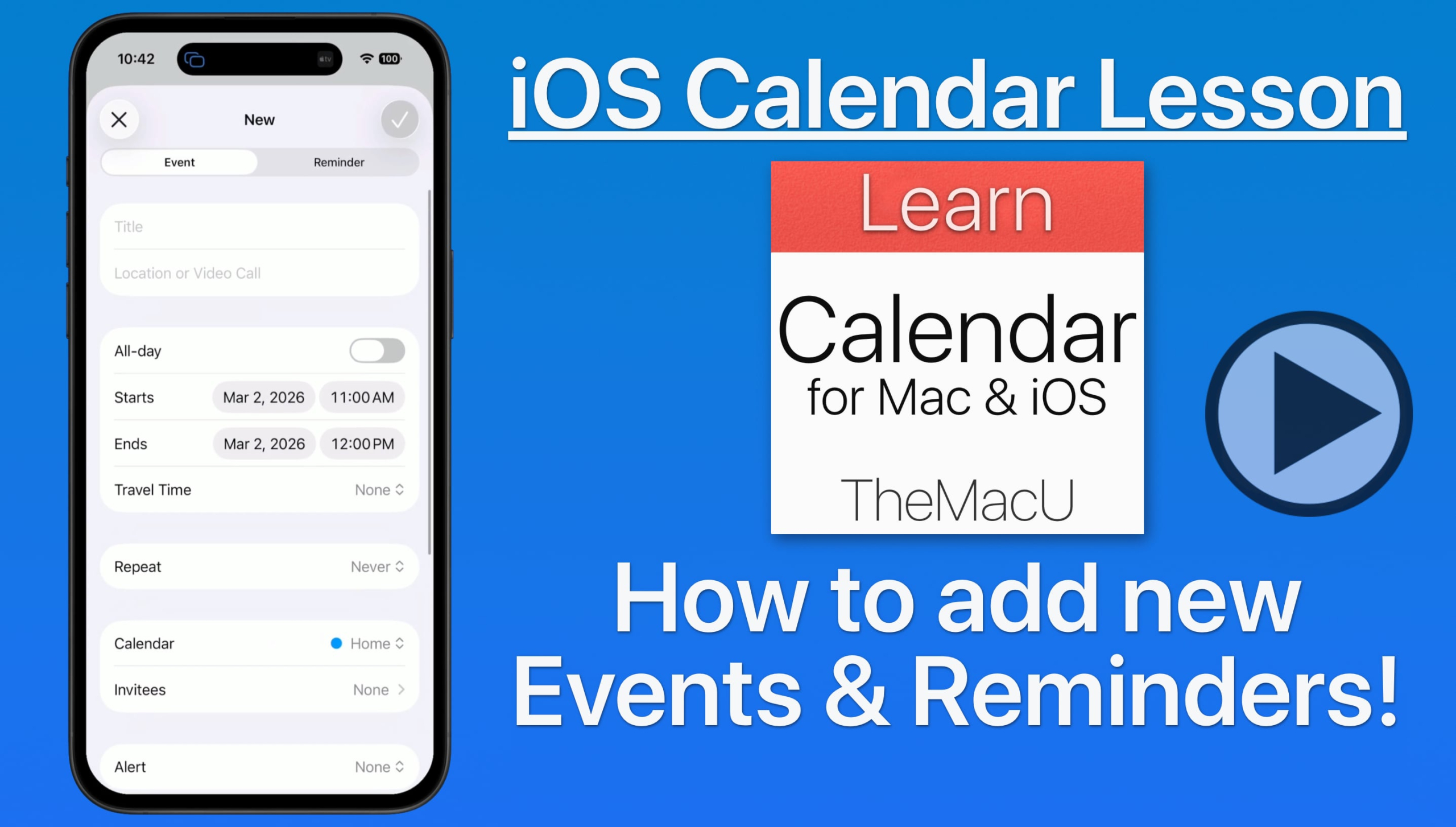
In this lesson from our full tutorial on the Calendar App for iPhone & iPad see how to add new events or reminders to the Calendar App.

Read more

March 6, 2026/1 Comment
https://themacu.com/wp-content/uploads/2026/03/addeventsrem-splsh-scaled.jpg 1454 2560 Drew http://themacu.com/wp-content/uploads/2017/06/TMU.com-Header-logo-jpg-300x138.jpg Drew2026-03-06 18:39:482026-03-12 19:38:09How to add events & reminders in the iOS Calendar App. iPhone & iPad Tutorial!
Page 2 of 212

All Access

View our comprehensive collection of Mac, iPad, and iPhone tutorials today! We offer a range of membership options, all starting with a free trial!

Start your Free Trial!

Search Topics

Search Search

Topics

Apple Intelligence Apple Maps Apple Music camera desktop Finder High Sierra iCloud iMac iMovie iOS iOS 11 iOS 12 iOS 13 iOS 14 iOS 15 iPad iPadOS iPad Pro iPhone iPhone 11 iPhone 12 iPhone X Luminar Mac Macbook Macbook Air MacBook Pro Mac Mini macOS macOS Catalina Mail Maps Mojave Music Notes Photo Editing Photo Enhancement Photos Safari Settings Sierra tips troubleshooting tutorial

Archive

Free Lessons!

  • How to Set Up Emergency Contacts & Medical ID on iPhone
    How to Set Up Emergency Contacts & Medical ID on iPhone!May 25, 2026 - 4:03 pm
  • Apple Maps for Mac: Master Places, Pinned Locations & Custom Guides! Step by Step Tutorial.May 10, 2026 - 4:40 pm
  • Safari Profiles on iPhone & iPad — Keep Work & Personal Browsing Completely Separate!May 2, 2026 - 4:33 pm
  • How to Use the Info Panel in Apple Photos for Mac: View, Edit & Organize Your Photo DetailsApril 19, 2026 - 5:21 pm
  • Remove photos from your Main Library when they are in an Album! Apple Photos Lesson for Mac & iOS!April 11, 2026 - 5:28 pm
  • How to add subtasks in Reminders for Mac! Step by Step Tutorial.April 8, 2026 - 10:30 pm
  • Organize Reminders with Lists, Sections & Groups – Apple Reminders App Tutorial!March 29, 2026 - 4:46 pm
  • panorama photos - iPhone Camera tutorial
    How to shoot fantastic Panorama Photos with iPhone Camera. Horizontal + Vertical!March 19, 2026 - 5:21 pm
  • what are photo bursts on iphone
    What Are Photo Bursts on iPhone and Why You Should Use ThemMarch 19, 2026 - 2:18 am
  • How to use Tags to label & organize files or Folders on a Mac! macOS Tutorial.
    How to use Tags to label & organize files or Folders on a Mac!March 11, 2026 - 11:25 pm
  • How to add events & reminders in the iOS Calendar App. iPhone & iPad Tutorial!March 6, 2026 - 6:39 pm
  • How to use the look around feature in Apple Maps for Mac to tour cities and towns around the world!February 25, 2026 - 9:29 pm
  • How to operate the Flash on iPhone Camera!February 23, 2026 - 11:50 pm
  • control center customization tutorial for Mac
    How to customize Control Center in macOS 26 & Later!February 20, 2026 - 8:58 pm
  • Learn to manage the previous recipients list in the Apple Mail App for Mac!February 16, 2026 - 9:45 pm

All Access

  • Tutorials Browser
  • Account

Browse

  • All Tutorials
  • Core Tutorials
  • Productivity Tutorials
  • Photography Tutorials

Blog

  • Free Apple Watch Lessons! (4)
  • Free iOS Lessons (150)
  • Free Mac Lessons (162)
  • Mac, iPhone and iPad Tips! (39)
  • News (101)
  • Recommended Items (3)
  • Uncategorized (73)
  • Updates (95)

About & Info

  • Contact
  • About
  • Partners & Affiliates
  • Group Memberships
SwansonDigital, LLC Ltd. All Rights Reserved. TheMacU.com has not been sponsored, or otherwise approved by Apple Inc. - Enfold WordPress Theme by Kriesi
  • Link to Facebook
Scroll to top Scroll to top Scroll to top